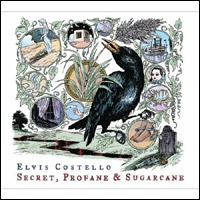
 Elvis Costello has been releasing albums both major and minor about once a year for three decades now, which is an achievement in itself. That only one or two of them can be considered mediocre, and not one truly bad, is an astonishing accomplishment. And his latest album, Secret, Profane and Sugarcane, puts him in no danger of breaking that streak.
It is, though, one of his “minor” albums, a genre exercise that recycles a few older tunes and doesn’t aim too high. It’s a low-key collection of old-timey bluegrass numbers about carnival men and slave traders, loose women and broken-hearted men. The songs are not as innovative or strong on melody as Costello’s best output, but they work well as a group.
 It was four years before Costello released another solo album — 2008’s Momofuku. He did put out an album with Allen Toussaint in the middle there, but I haven’t heard it enough to feature it here. I’ve been meaning to give it a listen but haven’t gotten around to it.
 A year after When I Was Cruel, Costello released the only original album of his that I’ve chosen not to own — a collection of MOR ballads called North. I think I listened to the album twice before coming to terms with the fact that I’d never listen to it again. Even worse than the uninspired Goodbye Cruel World, it’s the only time in Costello’s career that he didn’t even make it out of the gate.
 Four years after Painted From Memory, six years after All This Useless Beauty and eight years after Brutal Youth, Costello finally released another rock-n-roll album.
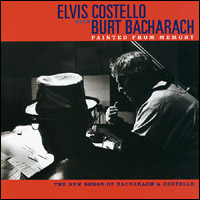 Costello put all of his recent vocal training to good use on his next release, a collection of crooner ballads written with Burt Bacharach. This is far and away the squarest release of his career — even The Juliet Letters feels like punk next to this one.
 Meet Me In Montauk