 My family and I play this game where we line up movies, songs or musicians into a college hoops-style bracket (OK, I line up the brackets) and vote on a series of matchups until you narrow things down to a final face-off.
So a Steven Spielberg game might see Jaws up against Always in an early round (an easy pick for most people, I imagine) then advancing to face Schindler’s List in round two (maybe not as easy a pick, though I’d still go with Jaws).
We played this game using Billy Joel songs once and after a drawn-out battle, our final two were both tracks from Joel’s classic 1977 album The Stranger — ‘Vienna’ and ‘Scenes From an Italian Restaurant.’
 Looking at the numbers makes Billy Joel’s “retirement” all the more impressive. He truly went out at the top of his game, with River of Dreams selling more than 5 million copies and vying for an Album of the Year Grammy. To just hang it up after a success like that takes some guts.
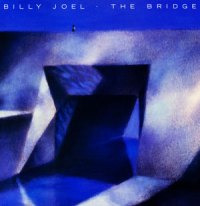 1986’s The Bridge was Billy Joel’s last great album and my fifth favorite of his albums (I’ll let you guess the other four). It contains only nine songs but they’re uniformly strong. The one minor exception is the rather maudlin ‘This is the Time,’ which probably wasn’t written for a high school prom but may as well have been.
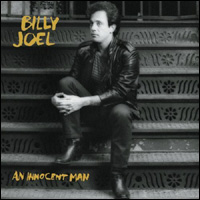 Joel followed up Nylon Curtain with one of his best-selling albums, the 50s flavored An Innocent Man. This is one of his slightest albums, most likely by design. The doo-wop ear candy of ‘The Longest Time’ and the cornball ‘Uptown Girl’ are about an inch deep, inspired by similar songs Joel loved as a kid.
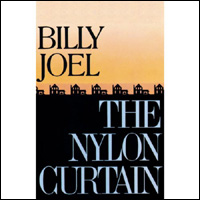 The Nylon Curtain is one of Billy Joel’s most ambitious albums, and one of his best. Two years after the major success of the expectation-defying Glass Houses, Joel changed things up again, paying more attention than ever to the production values of his work and crafting an homage to his childhood heroes The Beatles.
