
Song of the Day #996: ‘Down Among the Wines and Spirits’ – Elvis Costello

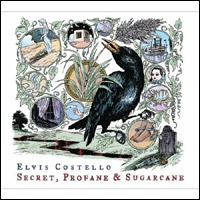
It’s funny that I’ve described Elvis Costello’s Secret, Profane and Sugarcane as “modest” and “minor” by his standards.

The opening track, ‘Down Among the Wine and Spirits,’ is introduced like this in the album’s elegant liner notes: “A Former-Champion Prize fighter Discovers His Name Printed Just Above The Liquor Licensee.”

Other songs on the album have similar introductory explainers: “A Dissatisfied Woman Fears Talking In Her Sleep,” “P.T. Barnum Reads An Abolitionist Pamphlet While Manufacturing Souvenirs Of The  All-American Tour,” “Profane Adaptation Of Pious Song Performed By Acclaimed Nightingale,” you get the picture.
Continue reading

Song of the Day #995: ‘I Felt the Chill Before the Winter Came’ – Elvis Costello

Just a year after Momofuku, Elvis Costello returned with a modest acoustic collection. 2009’s Secret, Profane & Sugarcane was recorded in Nashville with T Bone Burnett, and was Costello’s first totally acoustic album since King of America.

Call this one King of Americana. Costello tours the old American songbook, trying his hand at country blues and bluegrass, and his affection for these styles shines through every note. This album is a grower… it’s the opposite of hook-heavy, and some of its songs meander a little too much for repeated listening. But I admire what he’s doing here and at the very least, it’s a beautiful sounding album.

Continue reading

Elvis Costello – Secret, Profane and Sugarcane

sugarcaneElvis Costello has been releasing albums both major and minor about once a year for three decades now, which is an achievement in itself. That only one or two of them can be considered mediocre, and not one truly bad, is an astonishing accomplishment. And his latest album, Secret, Profane and Sugarcane, puts him in no danger of breaking that streak.

It is, though, one of his “minor” albums, a genre exercise that recycles a few older tunes and doesn’t aim too high. It’s a low-key collection of old-timey bluegrass numbers about carnival men and slave traders, loose women and broken-hearted men. The songs are not as innovative or strong on melody as Costello’s best output, but they work well as a group.

Continue reading